
A Simpler and Safer Way to Do Spine Surgery
For most people, the word surgery itself is scary. When it is related to the spine, the fear becomes even stronger. Patients usually worry about pain, long rest, and whether they will be able to walk or work normally again. These worries are very common.
Minimally invasive spine procedures were introduced to reduce this fear. The aim is not to “open the whole back”, but to reach only the exact problem area. When less disturbance is done to the body, recovery becomes easier and confidence improves faster.
How This Type of Spine Surgery Is Different
Before, to perform back surgery, one had to make big incisions and deal with the strength of the muscles. However, in the minimally invasive procedure, the approach is different. The surgeon uses tiny incisions to carry out the operation using advanced tools and vision.
Muscles are shifted away instead of being cut. Only the damaged part of the spine is cut, but the healthy parts are left intact. Because of this, many patients find it easy to move around compared to before.
When Minimally Invasive Surgery Is Considered
Surgery is not always required in the treatment of the back and neck. Furthermore, in most instances, the patient can recover without the use of surgery. However, surgery may be required in the following scenarios if the underlying conditions persist or if the pain continues for a long time, or if the inflammation of the nerves affects the performance of activity of the daily chores of sleeping, sitting, or walking.
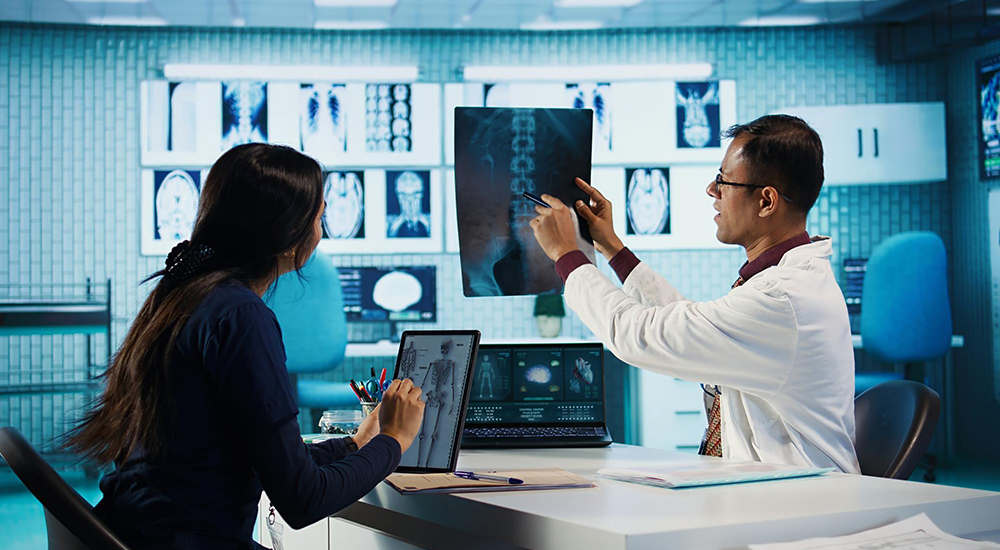
The doctor's study all these images and also consider the experiences the patient has in real life. Age, working routines, and other health-related issues are also analyzed before the surgical procedure is carried out.
Why Patients Often Feel More Comfortable with This Approach
When the procedure is carried out for the correct reason, benefits of the minimally invasive spinal treatment can often be realized by the patient during the recovery period itself.
Recovery, Safety, and What to Expect Later
Most of the time, the healing procedure starts early. Patients can mobilize safely. This reduces tightness and alarm. There are no problems with pain control. This is reduced gradually.
There are also safety procedures done after the surgical process. Follow-up visits enable healing to take place knowing that everything is going correctly. In ideal environments, it provides long-term relief for improved living.
Common Minimally Invasive Spine Procedures
Endoscopic Spine Surgery
Microdiscectomy
Minimally Invasive Disc Surgery
Percutaneous Spine Procedures
Laser Spine Procedures
Care That Is Thoughtful and Patient-Focused
Every spine injury is unique. There's no 'rush job' in spine surgery. Patients are made aware of all available alternatives. Anything less isn't an honest practice.
When selecting minimally invasive procedures for spine treatments, patients can experience stress reduction to their bodies because these procedures promote a smooth recovery process. The main aim is always to be safe, comfortable, and confident to get back to their normal day life.